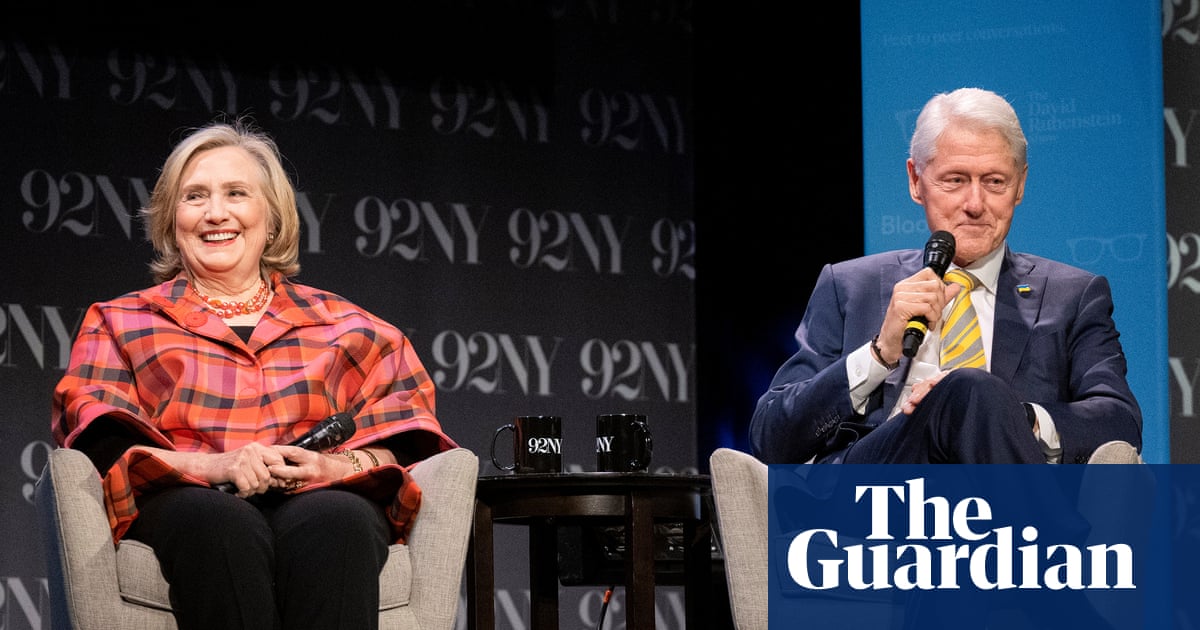
Hillary Clinton Faces House Oversight Grilling on Jeffrey Epstein's Elite Network
The intricate and disturbing saga surrounding the late financier and convicted sex offender Jeffrey Epstein continues to cast a long shadow, drawing in powerful figures from across the political spectrum. In a significant development, former Secretary of State Hillary Clinton recently underwent a closed-door deposition before the Republican-led House Oversight Committee, facing questions specifically regarding her knowledge of Epstein's powerful connections and the government's handling of investigations into his sprawling network. This highly anticipated testimony underscores the ongoing public demand for accountability and transparency in a case that has implicated numerous high-profile individuals.
The proceedings, which took place at the Clintons' residence in Chappaqua, New York, marked a pivotal moment in the committee's probe. While the deposition itself was not open to the public, it was filmed, with footage expected to be released at a later date – a process reminiscent of past high-stakes testimonies involving the former First Lady. This interrogation of Hillary Clinton on Epstein's affairs is just one facet of a broader investigation, with former President Bill Clinton also slated to answer questions from the committee, highlighting the pervasive reach of Epstein's influence.
The Closed-Door Inquiry: Unpacking Hillary Clinton's Testimony
The agreement for Hillary Clinton to testify followed initial resistance from the Clintons, who had rejected subpoenas from the House Republicans. However, facing the threat of being held in contempt of Congress, the prominent Democratic couple eventually acceded to the committee's demands. The terms of Hillary Clinton's agreement specifically focused on the federal government’s handling of investigations into Epstein and his convicted co-conspirator, Ghislaine Maxwell. Furthermore, a key component of the questioning revolved around Epstein and Maxwell's alleged efforts to leverage their connections to powerful figures—including the Clintons themselves—to evade accountability for their sex trafficking crimes.
Significantly, the agreed-upon scope of Hillary Clinton's testimony deliberately excluded topics unrelated to the Epstein investigation, such as her handling of the 2012 Benghazi attack or her use of a private email server. This narrow focus indicates the committee's intent to concentrate specifically on the nexus between Epstein's activities and the powerful individuals he cultivated. For a more detailed look into the initial developments surrounding this event, you can read Hillary Clinton Testifies in House Epstein Probe Amid Republican Scrutiny.
The scrutiny extends directly to former President Bill Clinton, who is scheduled for his own deposition. Bill Clinton has consistently denied any wrongdoing, yet he has publicly admitted to flying on Epstein’s private plane multiple times. Recently released files have further intensified this scrutiny, including photographs that show the former president in potentially compromising situations, such as one image depicting him in a hot tub with Epstein and an unidentified woman. Hillary Clinton, for her part, maintains she never met Epstein but acknowledges interactions with Ghislaine Maxwell, his long-time partner and accomplice. This complex web of connections forms the backdrop against which the House Oversight Committee is conducting its inquiries, seeking to unravel the extent of the influence peddled by Epstein.
Political Dynamics and the Pursuit of Transparency
The decision by the House Oversight Committee to interrogate Hillary Clinton on Epstein's connections is deeply intertwined with broader political dynamics. From the Republican perspective, this renewed focus on the Clintons offers a strategic advantage: it helps to redirect public attention, potentially deflecting from former President Donald Trump's own documented ties to Epstein. Bill Clinton himself publicly denounced the closed-door nature of the proceedings, labeling it "pure politics" and akin to a "kangaroo court," advocating for a public deposition.
The committee, however, insisted on a private session, with the promise that the recorded footage would eventually be released. This arrangement echoes Clinton's 1998 grand jury testimony, which was similarly recorded behind closed doors before being made public weeks later. The debate over transparency—whether such high-profile testimonies should occur in full public view or in a controlled, recorded environment—highlights a fundamental tension in modern political investigations. While a public forum can foster immediate accountability, a private setting might encourage more candid responses, especially when dealing with sensitive and potentially incriminating information.
The public's intense interest in the Epstein case, fueled by the gravity of his crimes and the wealth of powerful figures associated with him, demands a thorough and transparent accounting. Victims and advocates continue to press for justice, emphasizing that no individual, regardless of their political stature or influence, should be above the law. The congressional probe, therefore, serves not only as an investigatory mechanism but also as a symbolic gesture of commitment to uncovering the full truth behind Epstein's operations and the failures that allowed them to persist for so long. To understand more about the Clinton's position in this unfolding investigation, refer to Clintons Under Scrutiny: Inside the Closed-Door Epstein Investigation.
The Broader Implications of Powerful Connections and Accountability
The core of the House Oversight Committee's inquiry into Hillary Clinton on Epstein's network goes beyond individual culpability; it delves into the systemic issue of how powerful connections can be exploited to create a shield against justice. Epstein's ability to cultivate relationships with elites across various sectors—politics, finance, entertainment, and academia—allowed him to operate with a disturbing degree of impunity for decades. This aspect of the case raises critical questions about the ethical responsibilities of public officials and the mechanisms designed to hold them accountable.
- Understanding Congressional Investigations: It's crucial for the public to differentiate between congressional inquiries and criminal prosecutions. Congressional investigations, like the one involving the Clintons, primarily focus on oversight, policy reform, and uncovering facts related to governmental operations or public interest matters. They aim to inform legislation or public understanding, rather than directly prosecute individuals.
- The Erosion of Public Trust: When figures of immense power are implicated in or linked to heinous crimes, it inevitably erodes public trust in institutions and the principle of equal justice under the law. The Epstein case highlights the urgent need for robust ethical frameworks and vigilant oversight to prevent such abuses of power.
- Demanding Transparency: Citizens play a vital role in demanding transparency from their elected officials and governmental bodies. While closed-door sessions have their place, consistent public pressure for the eventual release of information and a clear accounting of facts is essential to ensure accountability and maintain democratic integrity.
The government's initial mishandling of the Epstein case, particularly its beginnings in Florida long after Bill Clinton left office, is also a focal point of the committee's investigation. This suggests a broader interest in identifying systemic failures within law enforcement and justice departments that may have allowed Epstein to evade serious consequences for years. The long shadow of the Epstein scandal continues to challenge the notion that justice is equally accessible to all, irrespective of their status or connections.
Conclusion
Hillary Clinton's testimony before the House Oversight Committee represents a significant chapter in the ongoing quest for truth and accountability in the Jeffrey Epstein scandal. Focused on the intertwined issues of powerful connections and the government's investigative failures, this closed-door deposition underscores the gravity of the allegations and the public's unwavering demand for answers. As the investigation progresses and Bill Clinton's own testimony looms, the political ramifications and the broader implications for public trust will continue to unfold. Ultimately, the outcome of these inquiries will test the resolve of the American justice system to hold all individuals, regardless of their influence, accountable for their actions and associations.